Cost and contracts
How much does e-commerce SEO cost?
Every e-commerce SEO campaign is custom quoted to your platform, the size of your catalogue, your target market and how competitive your sector is, starting from £585 a month, plus a one-off £195 set up. It is a fixed monthly fee, never a percentage of revenue. Treat our published prices as a starting point, then we tailor an exact quote to your store.
How much should I expect to pay for e-commerce SEO?
Plan on £585 a month + VAT as the starting point, with the size of your catalogue counting towards your exact quote. That buys content-led product and category page optimisation and technical SEO at scale from a UK team, and every online store can have a free SEO audit before committing to anything. On a platform other than a DPOM website, WordPress, Shopify or Wix, publishing is £60 a month + VAT on top, and included on Premium.
How it works
What is e-commerce SEO?
E-commerce SEO is how online stores get found in Google’s organic results without paying for every click. It covers the technical work, product and category page optimisation and content needed to rank your store for the terms shoppers search, so you win more product discovery and online sales over time.
How long does e-commerce SEO take to work?
E-commerce SEO is a long-term investment. You will usually see notable gains over several months, and performance keeps building the longer you invest, particularly as product pages mature and new content earns authority. Nobody can promise instant rankings, and the shortcuts behind quick results can get a store penalised.
How do you optimise product and category pages?
Product pages are where search traffic becomes revenue, so we optimise titles, meta data, unique product descriptions, image alt text and internal linking, so each product page can rank for the searches shoppers make. Category and collection pages get unique descriptions and a clean structure so they can rank for the broad terms shoppers use before they reach an individual product. You approve every change first.
Can you fix technical SEO problems on a large catalogue?
Yes. Large stores face issues that smaller sites never hit, and we tackle them head on. That covers crawl budget, faceted navigation, duplicate content created by filters and sorting, pagination, canonical tags, site speed and XML sitemaps built for big inventories, so search engines can efficiently discover and index every product.
What is product schema and why does it matter?
Product schema is structured data that tells Google what each page is, so it can show details such as price, availability and review stars as rich results in the listings. Google decides what to display, so nobody can promise a particular result, but richer listings can stand out and bring ready-to-buy shoppers to your products.
What kind of content do you create for online stores?
We write buying guides, product comparisons and blog content that answers the purchase-intent questions shoppers ask, and we improve your category descriptions and key pages. Two blog posts a month are written for you on every package. This content supports your product pages and builds the topical authority Google rewards, without ever resorting to spammy tactics.
Platforms and Google Shopping
Which platforms do you work with?
We deliver e-commerce SEO across all the major platforms, including Shopify, WooCommerce, Magento and BigCommerce, as well as custom and headless builds. We adapt the strategy to your platform, because crawl behaviour, URL structure and how product variants are handled differ from one to the next.
Which platforms do you provide e-commerce SEO for?
Shopify, WooCommerce, Magento, BigCommerce and beyond. We publish the work we plan for you free on a DPOM website, WordPress, Shopify or Wix, and WooCommerce stores run on WordPress. On any other platform, Magento and BigCommerce included, publishing is £60 a month + VAT, and included on Premium. Nothing goes live until you approve it.
Does e-commerce SEO work alongside Google Shopping and PPC?
Yes, they sit well together. SEO earns free visits to your product and category pages, while Google Shopping and Google Ads put your products in front of shoppers who are ready to buy now. As a Google Partner we run both as separate services, so you can have coverage across the free and the paid results for the products that matter most. Our Google Shopping management page has the detail.
Will my product feed be optimised too?
Not as part of SEO. Your SEO covers the product and category pages on your site, which is what organic search ranks. Product feed and Google Merchant Centre work are part of our Google Ads packages from Lite, with Shopping campaigns on every Google Ads package. Our Google Shopping management page has the detail.
Does e-commerce SEO help with Google Shopping too?
Indirectly. Shopping ads send shoppers to your product pages, and Google checks your product data against those pages, so accurate titles, descriptions, prices and images on the page help. But SEO does not run your feed, Merchant Centre or Shopping campaigns. That is a Google Ads service, with Merchant Centre work from our Lite package. Our Google Shopping management page has the detail.
Is it right for you?
What is SEO in retail?
Retail SEO is optimising an online store so its product and category pages rank for the terms shoppers search when they are ready to buy. In practice that means product and category page optimisation and technical SEO at scale, whatever your platform, and it is a monthly service rather than a one-off project.
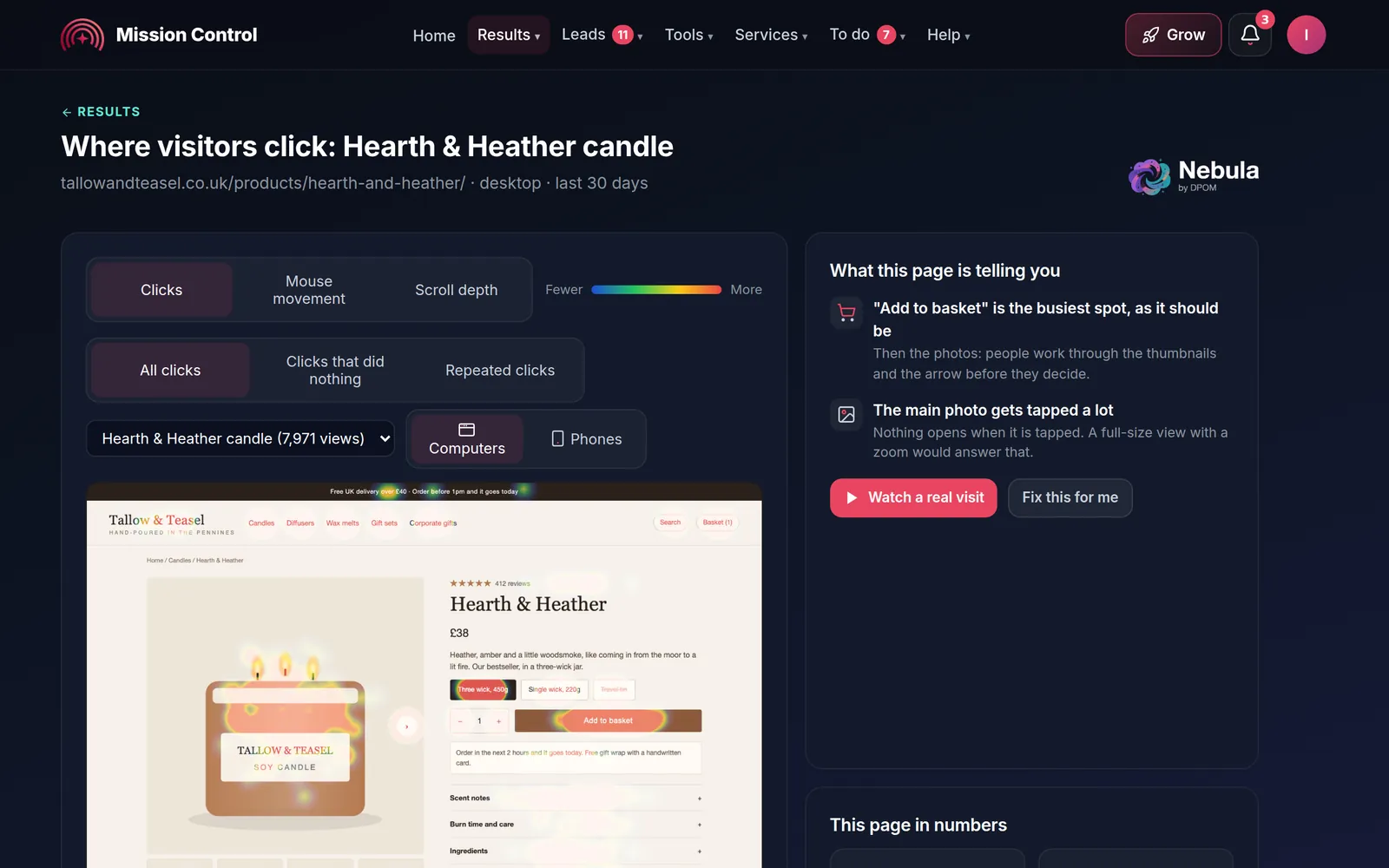
 NebulaSee where visitors click, scroll and drop off.
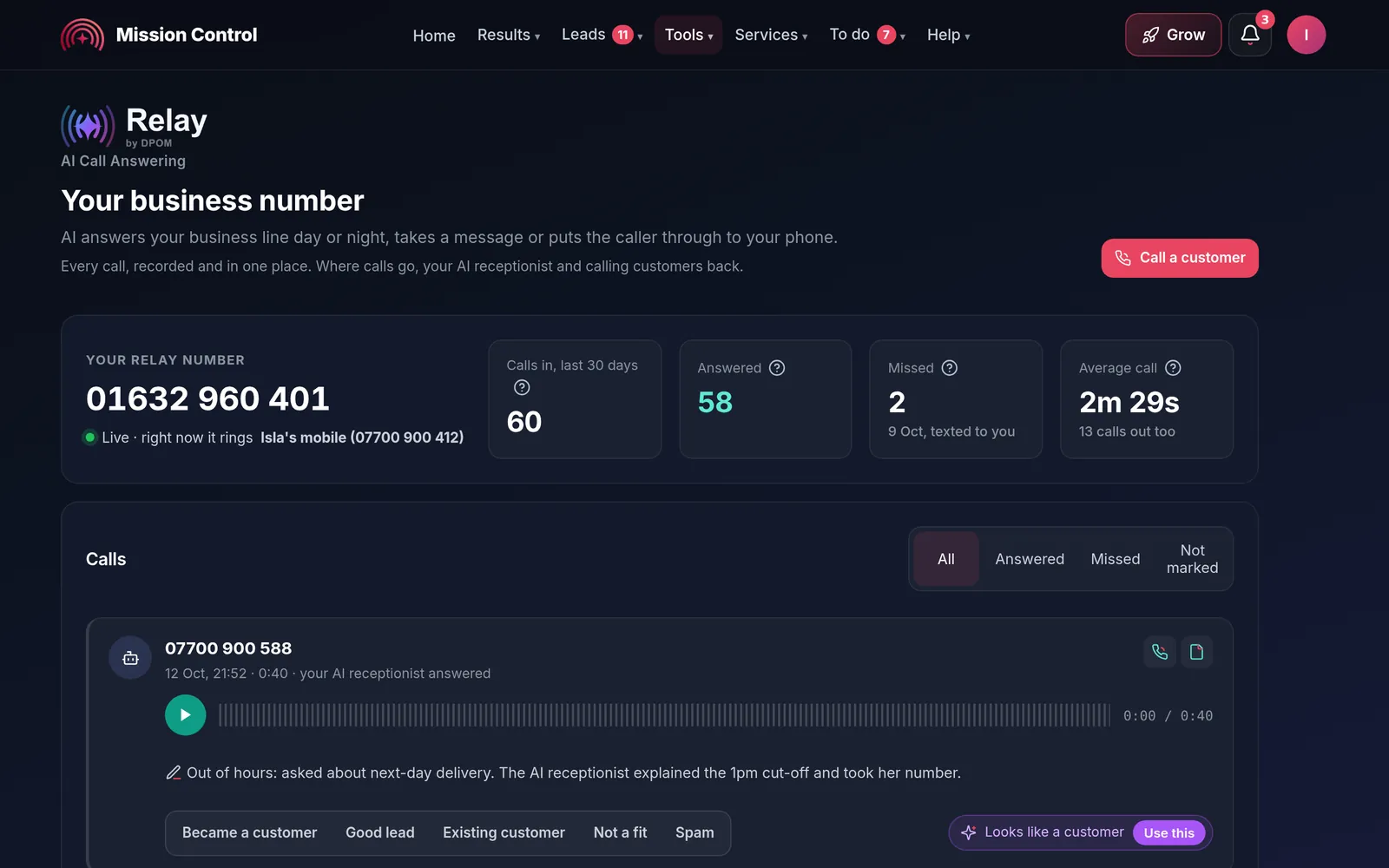
 Relay ConvertSee which calls came from Google search. 130 minutes, 8 numbers.
 A Relay business numberA UK number that rings your phone. 130 minutes a month.
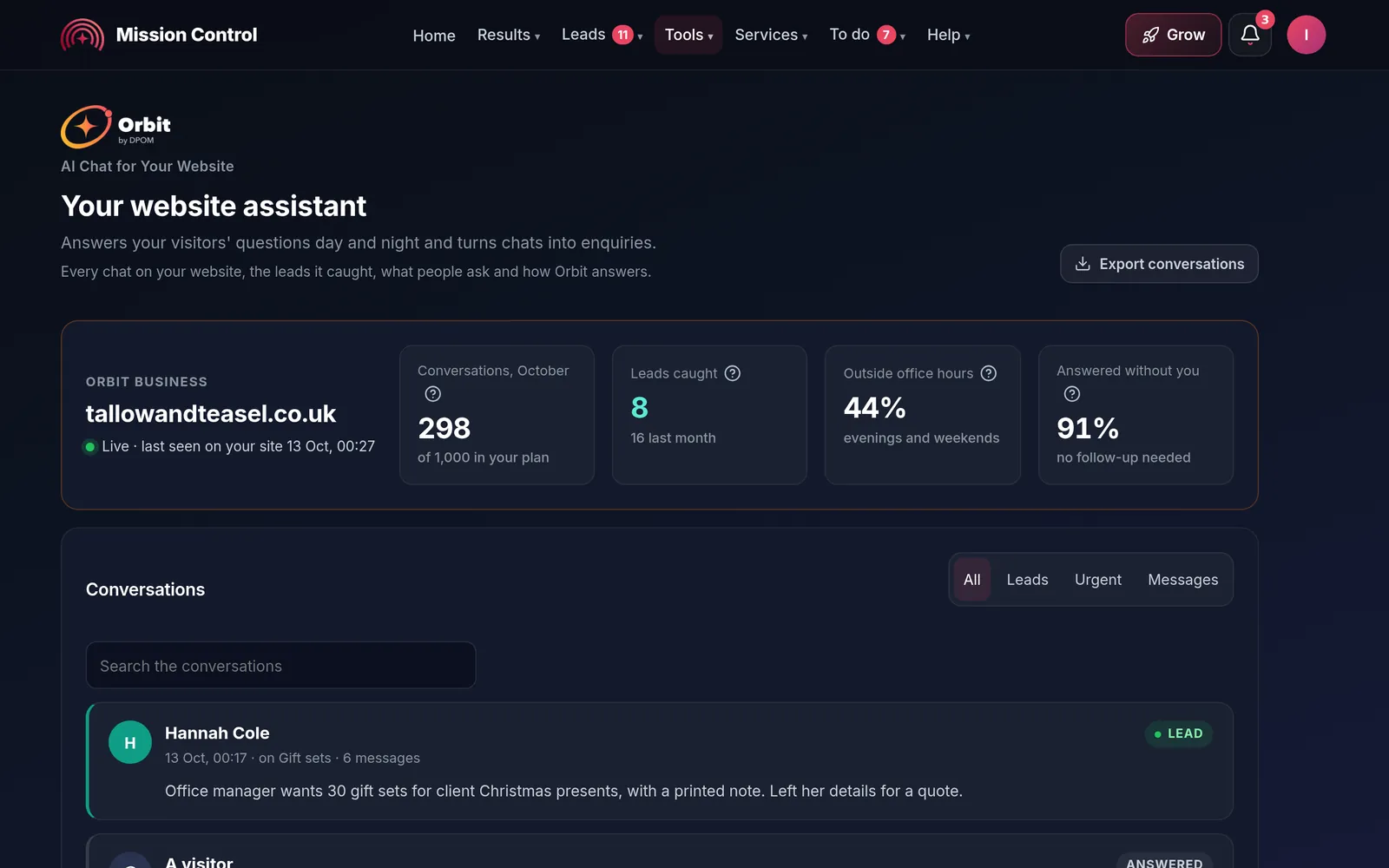
 Mission Control, James and the Form BuilderLive rankings, every enquiry, and James for an update day or night.




 Patrick
 Valerie
 Brett
 Jayme
 Nige
 James
